Peter Morrell tastes a range of wines, all made with indigenous grapes
Cyprus, the sun-drenched island at the crossroads of Europe, Asia, and Africa, boasts one of the oldest continuous wine traditions in the world. With over 6,000 years of winemaking history, the island’s vineyards are steeped in legend, shaped by geography, and now renewed by a new generation of passionate vintners. Cyprus wines are experiencing a renaissance — where ancient grape varieties meet modern craftsmanship.
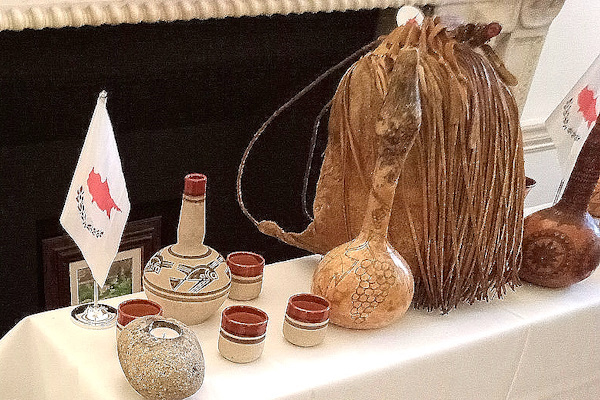
I arrived at a recent tasting as a complete novice regarding Cyprus wines, so for me this was an oeneological voyage of discovery. Before the tasting I was shown numerous antique wine-related artefacts, a beautifully crafted shepherd’s bag used for carrying wine and food, elaborately decorated gourds that act as wine bottles, and an amusing Pythagorean cup, or Greedy Goblet where a clever siphonic system which only allows a certain amount of wine to be poured before it drains from the bottom of the cup.
Now, onto the wines. Time and space don’t allow me to cover all the wines, so here is a representative selection. I started with three wines from the Zambartas Winery. My first was a young white made with the ubiquitous Xynisteri grape. The wine was bright and fresh with hints of apple, citrus and herbs, an ideal aperitif on a warm summer’s day. The second showed the versatility of Xynisteri, this wine, the single vineyard Xynisteri, had been matured in small oak and acacia barrels. This aging process had completely changed the wine’s character, it was more rounded and nuanced and had vanilla and woody notes. This would be a great pairing with seafood, summer salads, and savoury tarts. The final was made with the very rare Promara grape, a rare indigenous white variety being revived by boutique wineries. Half of this wine is matured in old oak barrels giving it a smooth mouthfeel and range of flavours from mango through peach to apricot.
I moved on to the Krasopoulin Winery and tasted a red, the 2022 award winning Pappous made with the Mavro grape. In the mouth the wine was well rounded and full bodied, with well-structured tannins which made it very dry. Dark fruit flavours dominated.
The Vouni Panayia Winery were exhibiting, and I tried their Woman in the Wine Press 2022 made with the white Morokanella Grape. The grapes have been grown at high altitude and temperature variations make for very complex flavours. Aging on the lees has produced a wine with a lot of depth, featuring citrus, herbs and good minerality. The winery’s Plakota is a blend of two red grapes, Mavro and Maratheftiko. This mountain grown wine has a deep crimson hue with a good mouthfeel, on the palate the fruits are fresh and complemented with aromatic herbs. The final wine I tasted here was the Barba Yiannis 2017, a pure Maratheftiko which had been aged in old Freench oak barrels. This bold wine had cherry and other dark fruit flavours combined with vanilla, oak, and notes of leather and tobacco, a very elegant wine.
I had a very pleasant surprise tasting a white from the Oenou Yi Winery, the Vasilissa is made with a rare grape of the same name. It had a powerful hit of floral violet flavours with a subtle taste of raisins, a very characterful wine.
My last tasting was with the Mallia Winery, I tried the 2018 Heritage, a single varietal Maratheftiko. The production of this wine keeps the grape skins and stalks in contact with the juice for the entirety of the fermentation, this ensures that all the flavours and aromas are extracted from the grape. The result is a pot pourri of taste experiences featuring floral notes, herbs, plums, cherries and cranberries.
I’ve left the crowning glory of Cyprus wine production to the end. This wine dates back to 800BC and is the oldest named wine, with the term Commandaria being used from the 12th century. I tasted the St John Commandaria from Mallia, but Commandaria is also made by other wineries in a strictly defined region containing 14 villages on the eastern slopes of the Troodos mountains. Two grape varieties, Mavro and Xynisteri, are left to overripen on the vine before being harvested and left to dry in the sun. This concentrates the flavours before being crushed to produce a syrup with an exceptional bouquet. After fermentation it is aged for at least two years in oak barrels before being bottled. The taste is exquisite with strong honey, raisin and fig notes together with toffee, spices and molasses. This is the ultimate dessert wine.
This had been an excellent tasting with plenty of surprises, it’s evident that a new generation of winemakers is having a huge effect on the quality of Cyprus wines. I felt that I was not just drinking wine but enjoying a taste of history itself.
 AboutMyGeneration